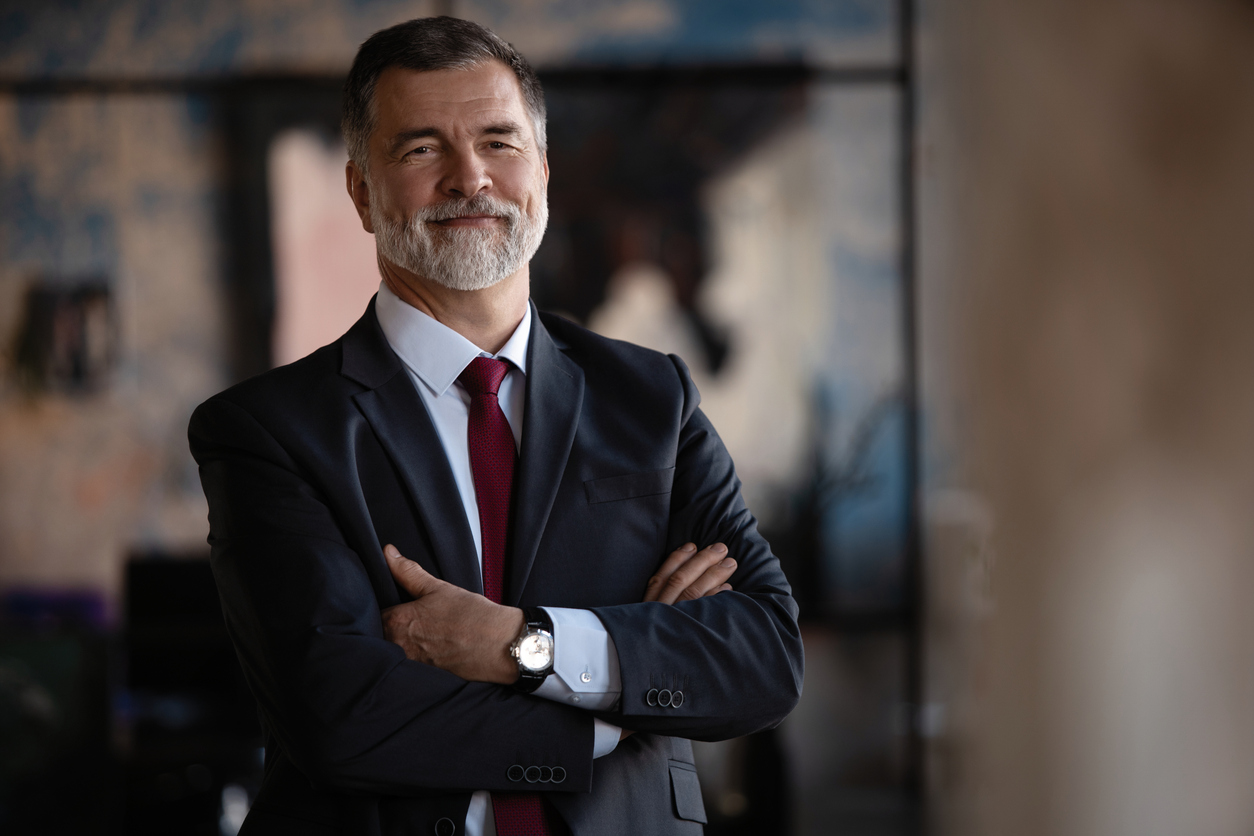

There is a particular kind of phone call that executive advisors learn to recognize within the first ten seconds. The title is impressive and the CV is dense with results, but the voice on the other end is quietly panicked. The caller has just realized that twenty years of running divisions, closing deals and sitting on leadership committees have left almost no public trace of who they actually are.
They have a title, but not a brand. Now a transition is suddenly on the horizon: a board restructuring, an acquisition, or a mutual “next chapter” conversation with the chair. They are being asked to introduce themselves to a market that has never had to think of them as anything other than “the person in that role at that company.”
The scenario is common enough that executive search professionals and transition advisors now treat it as a known pattern. The personal brand gets built retroactively and under pressure, at exactly the moment it is hardest to build well. In search circles it is sometimes compared to writing wedding vows during the divorce. With CEO retirements rising sharply and restructuring becoming the normal operating model rather than a passing phase, more senior leaders are making that call with less warning than they expected.
Executive reputation was always inside the role
Many senior leaders only discover in transition that their reputation was never really about the company logo in their email signature. In Weber Shandwick’s global study The CEO Reputation Premium, which surveyed more than 1,700 executives, respondents attributed 44% of a company’s market value to the reputation of its CEO. That share belongs to the person at the top, not the brand, the product line or the balance sheet.
German research points in the same direction. An analysis by the IMWF Institut für Management- und Wirtschaftsforschung, based on 4.2 million online mentions between October 2024 and September 2025, linked even small improvements in reputation to significant gains in share price, as Der Bank Blog reported. For anyone who has spent years building the company’s story instead of their own, those numbers should change how they think about that time.
The problem is that most executives spend a career embodying the reputation without ever owning it externally. Internally, they are known, trusted and referenced. Externally, they are often invisible to the market, to the board committees evaluating them for their next seat, and to the journalists who might one day call for comment. The company did all the talking.
That invisibility is not a personality flaw but a structural one. Most corporate cultures discourage individual visibility in favor of institutional messaging, and they do so more strongly the higher an executive climbs. The irony is that this happens during exactly the years when a personal brand would be easiest, and cheapest, to build. WFA Insights has described what happens next in Who’s Who to Who’s That: the quiet that falls when the title goes and the network turns out to have been attached to the role rather than the person.
Germany’s boardrooms are going online, unevenly
German top management has moved noticeably toward visibility in recent years, though not uniformly. When Kekst CNC analyzed DAX chief executives on LinkedIn for 2022, it found that only 66% had a profile and 56% were actively posting, with an average of just 463 followers. By 2025, the palmerhargreaves LinkedIndex 2026 counted 84 LinkedIn profiles among 105 HDAX CEOs, 69 of them active. Siemens chief Roland Busch climbed from 17th place to first in a single year.
The detail worth noticing is what those leaders talk about. According to palmerhargreaves, the most successful CEOs mostly tell the story of their organization’s transformation rather than their own career. That works well while they are in the role. The day they leave, however, much of that visibility stays with the company. A profile built entirely on the institution’s narrative still has to be translated into a personal one.
Below the very top, the picture is thinner still. Divisional heads, managing directors and N-1 or N-2 executives at German corporations and Mittelstand companies rarely have that communications support behind them. They are, however, exactly the leaders that boards and search firms increasingly look at from the outside. As WFA Insights noted in its analysis of DAX board appointments, only a quarter of new DAX board members rose from within, which means most top seats go to people whom someone outside the company had to find, assess and trust.
Waiting until the transition costs more than expected
Search firms, boards and advisory networks increasingly treat digital visibility as a sign of market readiness. A national survey of 1,000 American professionals conducted for Aurora University found that 61% of business executives believe a strong personal brand now matters more than a strong CV. One in five respondents said they had missed an opportunity because their online presence did not match their professional identity.
For a senior leader heading into transition, that statistic has teeth. Board search committees, private equity operating partners and executive networks now routinely search a candidate’s name before the first call is scheduled. What they find, or fail to find, shapes the conversation before it begins. A leader with no searchable footprint does not come across as humble. They come across as unknown, and in rooms where risk aversion runs high, unknown is a harder sell.
There is also a quieter cost: lost momentum. A credible public presence, one that reflects genuine expertise rather than a rushed LinkedIn refresh, takes time to compound. The Executive LinkedIn Report 2026 by Executive Presence analyzed more than 6,000 posts and 33 million impressions from real C-suite leaders. It found that executive reach rose 14% year on year and that original posts reached five times as many people as reshares. It also found that a small group of seven consistent executives, each posting 15 or more times a month, generated 47% of all impressions. The leaders who were already showing up regularly were not more talented. They simply were not starting from zero when the market came looking.
Visibility is risk management
Senior leaders are often reluctant to invest time in visibility because it can feel indulgent or political, the kind of self-promotion that sits uneasily with an executive culture built on humility and results. In manager magazin, the entrepreneur and author Tijen Onaran describes exactly this reservation. Many leaders see social media as loud and vain and fear losing control, even though a personal brand can give them independence and the ability to shape their own image. The instinct is understandable, but it is outdated.
In a Deloitte survey of more than 300 executives, 87% rated reputation risk as more important than other strategic risks. Reputation that goes unmanaged does not stay neutral. Others define it: former colleagues, press coverage of the company during turbulent periods, or whatever surfaces when someone types a name into a search bar. A leader who never shapes their own narrative is not avoiding the game. They are letting someone else play it for them.
Boards, employees and investors have absorbed this lesson faster than most individual executives. In FTI Consulting’s Leading from the Front research, 92% of stakeholders surveyed said they were more likely to trust a company whose senior executives are active on social media. Brunswick’s Connected Leadership study for Germany found that 71% of employees and 59% of financial-media readers consider it important for leaders to communicate actively about their company on social media. During a crisis, that figure rises to 93% among financial readers.
That trust does not disappear the day an executive leaves. It is the asset that determines what comes next: the board seat, the advisory mandate, the operating partner conversation, or the call from a peer network built years earlier. It is also why WFA Insights increasingly frames leadership change as a governance matter and has argued that executive transition is a board-level issue, not a private one.
Building the brand before it is urgent
The senior leaders who handle transition most gracefully rarely describe what they did as “personal branding.” They talk about staying visible in their own voice, consistently, over years rather than weeks. A few patterns come up again and again among those who get it right. As Handelsblatt observed in its look at Germany’s most visible female top managers, leaders who position themselves well on LinkedIn can make a positive impression on applicants, investors and their own employees at the same time.
They write in their own voice, not the company’s. Recent research on executive communication consistently finds that leaders who write the way they actually speak, directly, specifically and occasionally unpolished, earn far more engagement and trust than those who fall back on corporate phrasing. A point of view stated plainly travels further than a balanced statement designed to offend no one.
They pick a lane and stay in it. The instinct to appeal broadly, commenting on everything from leadership to culture to the news of the day, tends to dilute authority rather than build it. The executives people remember are usually known for one thing: a specific point of view on a specific problem in a specific industry. A narrow focus is what compounds into a reputation.
They share the thinking, not just the outcome. Announcing a result, such as a closed deal or an award, reads as promotion. Explaining the reasoning behind a decision, including the uncertain or hard-won parts, reads as expertise. The difference is subtle but decisive for how a reputation develops over time, and it is closely tied to how senior leaders turn experience into legacy.
They treat consistency as the strategy, not a single campaign. A strong personal brand rarely comes from a burst of effort just before a transition. It comes from years of small, manageable contributions, such as a monthly article, a handful of considered posts and a willingness to be quoted. These build up quietly until the executive realizes they are already known before they introduce themselves.
They build relationships before they need them. Peer networks, board relationships and industry visibility work like compound interest: the earlier the deposit, the longer it has to grow. Executives who wait until their exit to start “networking” begin a process others started years earlier. That groundwork is also what makes a later portfolio career of boards, advisory roles and projects realistic rather than aspirational.
The case for starting now
None of this requires an executive to become a content creator, chase viral moments or perform a version of themselves they do not recognize. It requires a change in framing. The personal brand is not a project to finish before leaving a role. It is the visible record of expertise that should have been growing alongside the role all along. WFA Insights has called this transition readiness: preparing for a transition that is not even in sight yet.
The leaders who move on most smoothly are rarely the ones who worked hardest in their final year. They are the ones who spent the previous five being visibly and consistently themselves, so that when the transition came, there was nothing left to build from scratch. The market already knew who they were.
That quiet advantage is worth starting on today, long before anyone asks what comes next.
Your Next Chapter Deserves a Head Start
WiseForce Advisors works with senior executives, board members and leaders preparing for what comes next, ideally long before the transition is announced. As peer-to-peer advisors who have held senior roles themselves, the WFA team helps leaders clarify their positioning, make their expertise visible in their own voice, and build the relationships that open doors to board seats, advisory mandates and new leadership roles.
Whether a transition is imminent or still years away, the best time to start shaping your reputation is while you still hold the role.
Start a confidential conversation with WiseForce Advisors or explore more perspectives on leadership, boards and transition at WFA Insights.